|
|
TOM RICHARDS
Q&A by Michael Catling |
|
 |
Amazing coincidence...
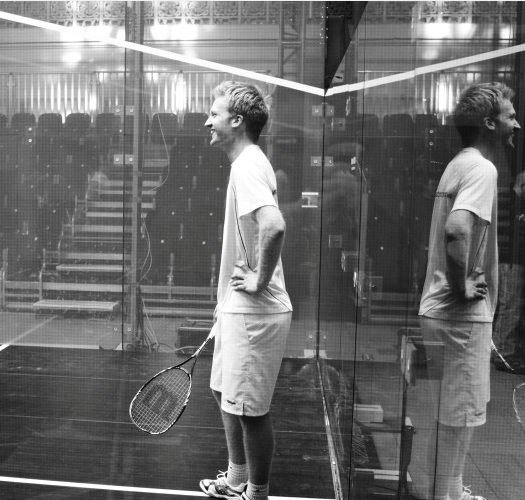
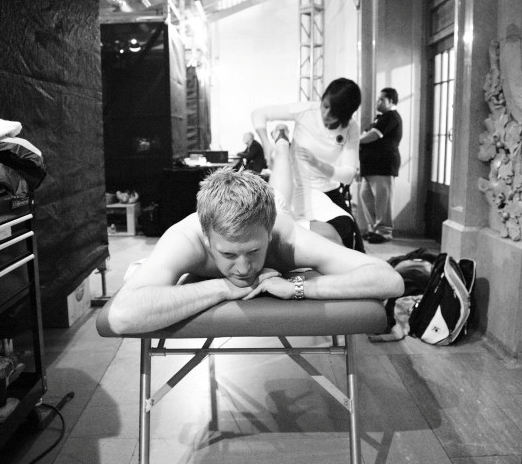
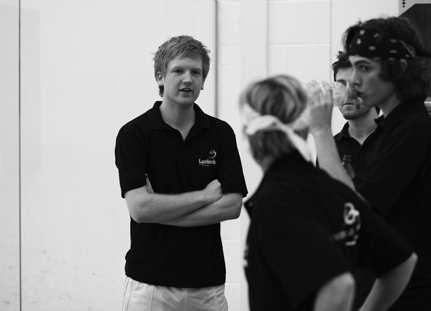
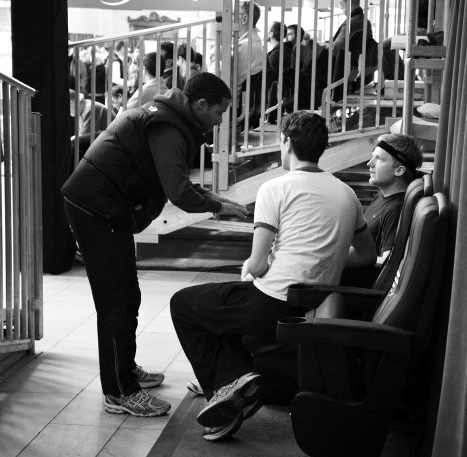
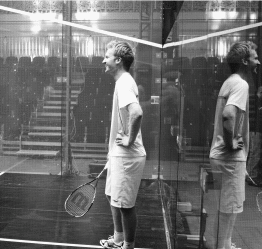
A few days ago, I got a mail from Charlie, Tom's brother,
who sent me a few b&w pics from his brother. Thought I would
use them in my corner as I just loved them.
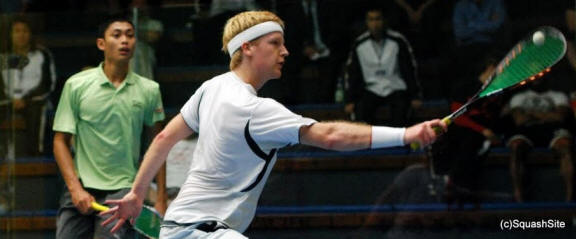
But when Michael Catling sent us a Q&A with the boy, thought
it was the perfect opportunity to use them.... Plus a few
from Cubs, Line and even one of mine...
 |
Under the
spotlight …
Tom Richards
After suffering a serious knee injury in 2007, many critics
wondered whether Tom Richards would ever be able to
fulfil his undoubted potential. Heralded as a future England
star, Richards’ injury kept him out of action for nearly a
year and left him outside the top-100. Five years on however
and Richards career is on an upwards spiral.
The 26-year-old has now firmly established himself as an
England international and is currently on the cusp of
breaking into the top-ten. Our man Michael Catling
recently caught up with Guildford’s rising star to uncover
his training and nutritional secrets ... |
 |
|
 |
|
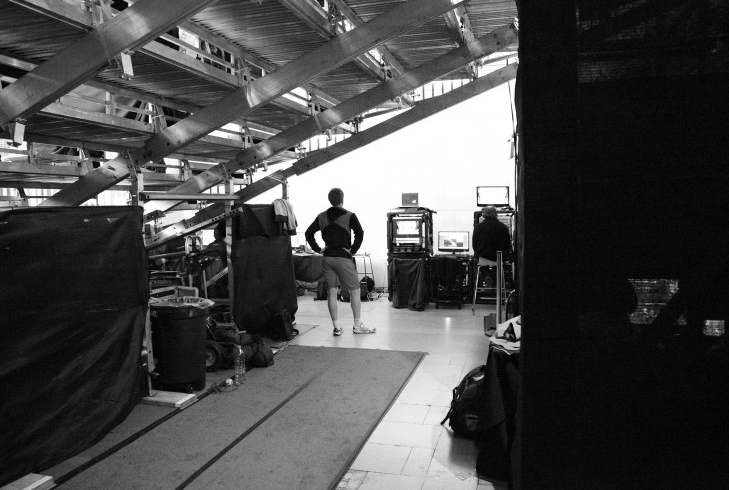
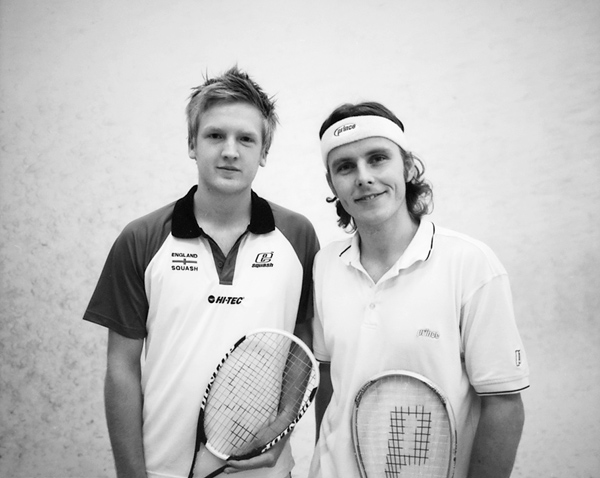
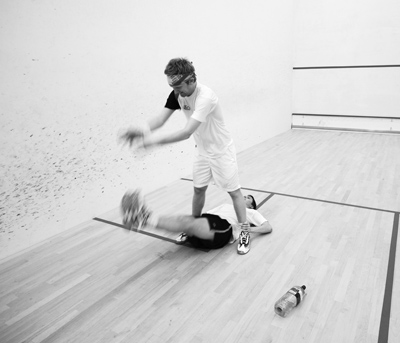
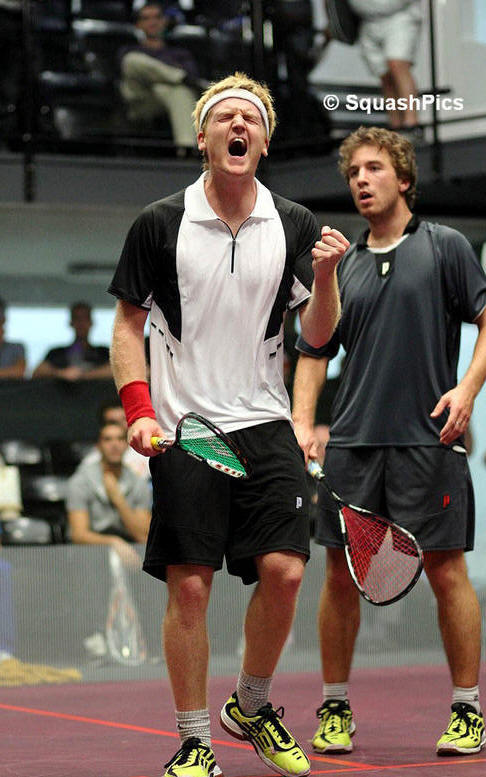
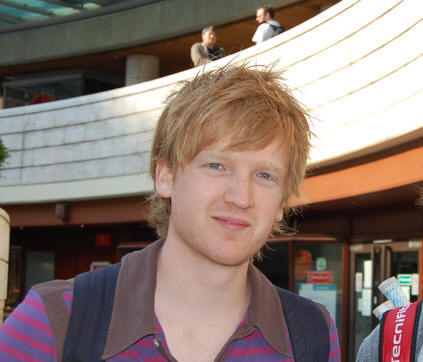
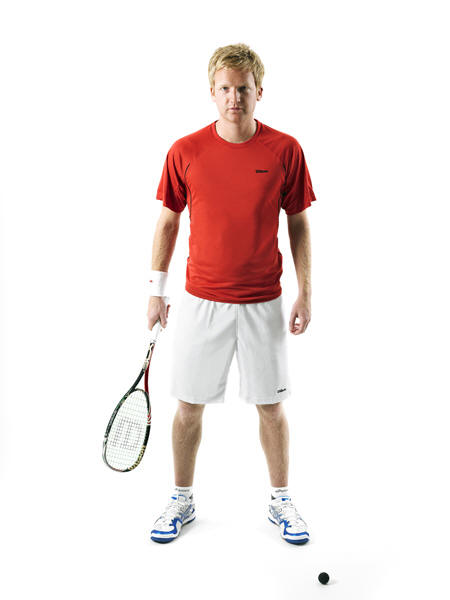
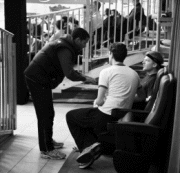
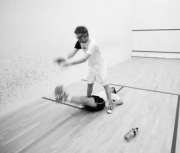
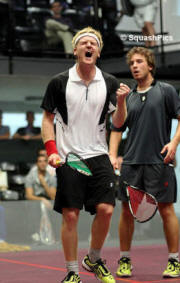
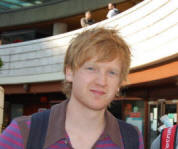
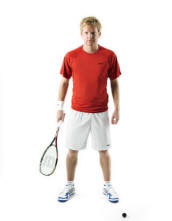
Charlie's photos



 |
What constitutes a normal
training week for you?
 My
sessions vary quite a lot depending on how close I am to a
tournament. In a training week, generally I play squash or
have a squash session once a day. I usually go on court for
a couple of hours; either for match practice or to perform
different training routines. My
sessions vary quite a lot depending on how close I am to a
tournament. In a training week, generally I play squash or
have a squash session once a day. I usually go on court for
a couple of hours; either for match practice or to perform
different training routines.
I also do another training
session a day, which tends to be in the gym doing cardio
workouts. Sometimes I go for a run or do a lot of bike work
so my sessions encompass all types of fitness.
Do you tailor your sessions towards a particular area
of fitness?
It varies but I mostly focus on anaerobic work to replicate
a squash match. When I run, it’s mostly anaerobic-centred
and likewise, the bike sessions where I really try and push
myself to the limit are again purely for anaerobic benefits
like building up lactic acid tolerance. I do try and mix it
up though as you have still got to do your fair-share of
aerobic stuff to build up your endurance.
You really have to try and strike a balance between all the
different aspects of fitness which can be tough. At the end
of the day, you’ve got to put the work in off the court and
hope that you can transfer that onto the squash court.
Are your on-court sessions quite flexible as well?
I do quite a few routine or conditioning-based sessions. I
do a lot of ghosting and grooving if I’m on court by myself
but if I’m training with other people, normally the sessions
are more routine-based or even just straight matchplay. As
you get closer to tournaments, you tend to play more matches
to get up-to-speed.
So would you say solo practice is a beneficial method of
training?
 Definitely! It gives you time to really work on different
aspects of your game. When you are training with someone
else, you almost have to pander to what they are doing as
well. Whereas when you are doing solo practice, you can
really get stuck into a certain aspect of your game. It’s
simply a case of hitting lots of squash balls and working
out your own swing and refining certain aspects of your game. Definitely! It gives you time to really work on different
aspects of your game. When you are training with someone
else, you almost have to pander to what they are doing as
well. Whereas when you are doing solo practice, you can
really get stuck into a certain aspect of your game. It’s
simply a case of hitting lots of squash balls and working
out your own swing and refining certain aspects of your game.
On average, how often do you train during a week?
I train every weekday, take Saturday off, and then train
once, possibly twice, on the Sunday. My sessions tend to
last four hours – two in the morning and two in the
afternoon. If I’m doing really high intensity stuff, I might
reduce the training time slightly. It does vary but as I’m
finding out as I’m getting older, it’s more about quality
rather than quantity.
Do you have a network of coaches that help you with your
on-and-off the court sessions?
Chris Robertson is my main coach. He doesn’t organise
my training programme as such but I see him probably once or
twice a week. I also get input from Danny Lee who’s
coached me for many years and also from Steve Meads
who I have known for quite a long time as well.
Who is responsible for devising your day-to-day training
programme?
As I’m part of the EIS [English Institute of Sport)
programme for squash, I get a weights and circuit programme
given to me by their strength and conditioning coach. The
programme is only used for two sessions a week really so
apart from that, I organise the rest of the other ten
sessions.
What types of exercises are outlined in your EIS
programme?
Most of them involve body-weight and strength endurance
workouts. Rather than lifting big weights, I tend to do lots
of repetitions and in quick succession to try and replicate
a game scenario. When I was younger I used to lift fairly
big weights but as I have grown older, I don’t really work
on my muscular strength as much. Instead, my sessions are
tailored towards a game-specific style.
How important is it to maintain a healthy diet?
I think it is extremely important. I don’t necessarily have
a strict diet but I’ve been a professional for eight years
now and I’ve learnt over time what kind of work you need to
do before and after tournaments.
You are always trying to be healthy regardless though.
Nothing can really supplement training itself but as long as
you can maintain an all-round healthy diet, I think that is
the key to physically feeling good and maximising training
Do you make any allowances in your diet for alcohol?
I do drink yes [laughs]. But I try to avoid alcohol a week
or two before a tournament. When I first started playing, I
was a lot stricter and didn’t drink that much at all. But
I’ve found that it’s quite a nice way of relaxing after a
tournament or at the end of a long, hard week of training.
As long as you don’t go overboard and end up drinking every
night, I don’t think it is necessarily a bad thing.
Finally, what advice would you give to amateur squash
players looking to devise a nutritional and training
programme?
I would advise people to plan their weeks fairly well in
advance. Before the week starts, you could maybe plan three
hard sessions, three moderate sessions, three light sessions
and then two others that you could maybe tailor depending
upon how you feel. I think planning plays an integral role
in trying to remain fresh and to reap the benefits of the
tougher sessions.
Nutritionally, I may sound a bit like a broken record but I
think you just need to eat healthily. You don’t necessarily
need loads of carbohydrates or loads of protein; you just
need a good mix of the two. |
|
 |
|