Quarter-Finals Day
The fifth day in Manchester saw the semi-finalists
decided in both men's and women's events, plus a host of masters
matches on another busy day at the National Squash Centre.
All the seeded players won through with the exception of Daryl
Selby, the 2011 champion beaten by Tom Richards, who has
overtaken in the world rankings him since the draw was made, so
it wasn't exactly a huge upset.
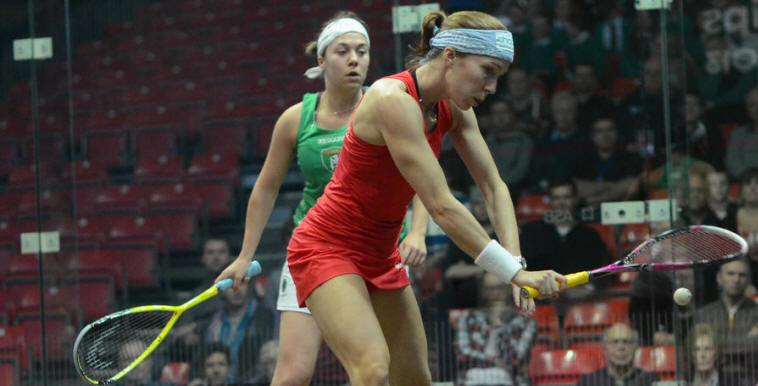
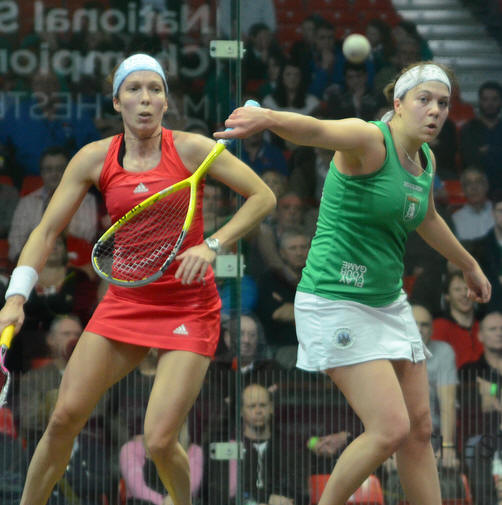
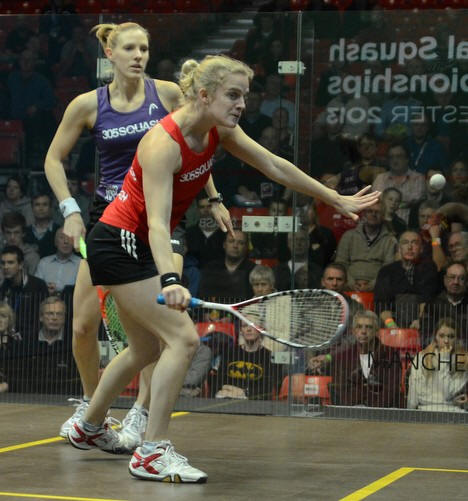
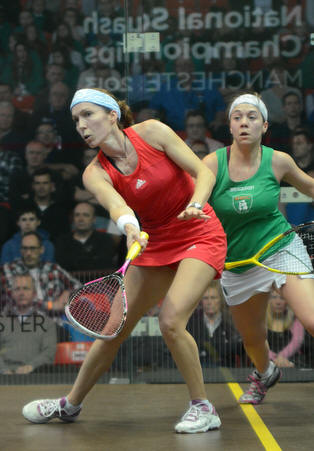
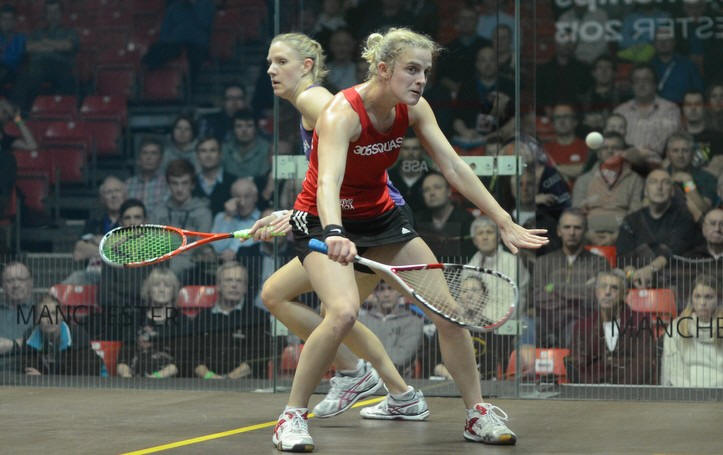
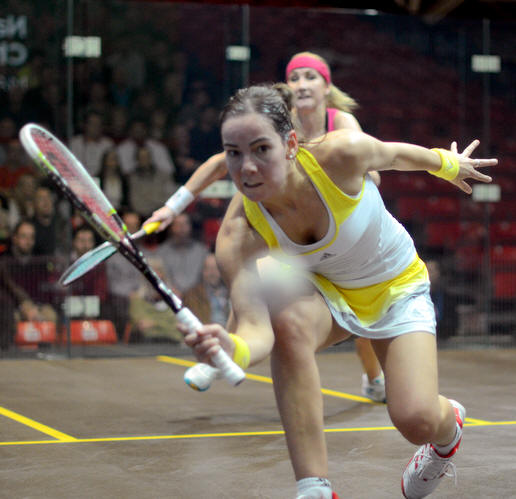
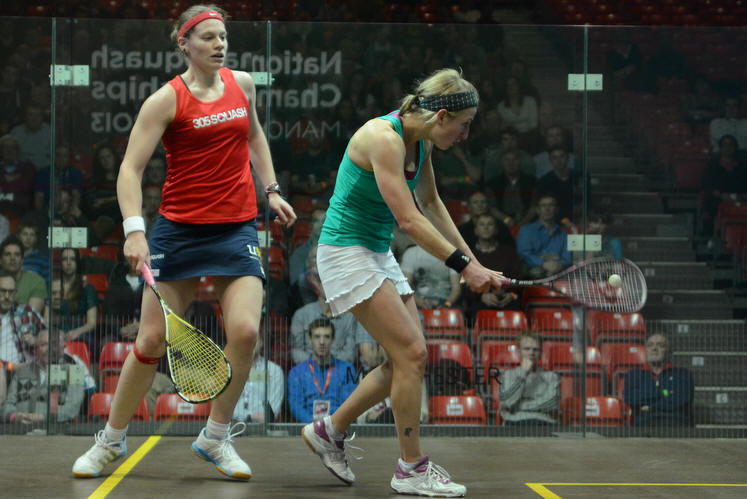
Women's Quarters: [1] Laura Massaro (Eng) bt [5/8] Emma Beddoes (Eng)
15/17, 11/4, 11/2, 11/9 (66m) [3/4] Madeline Perry (Irl) bt Deon Saffrey (Wal)
11/2, 11/4, 11/8 (25m)
Men's Quarters:
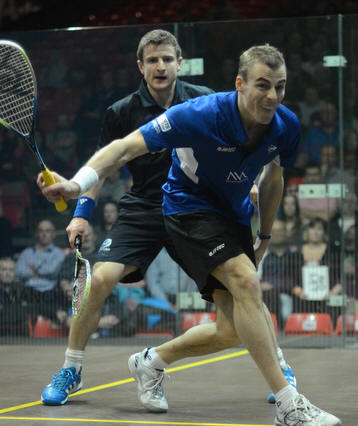
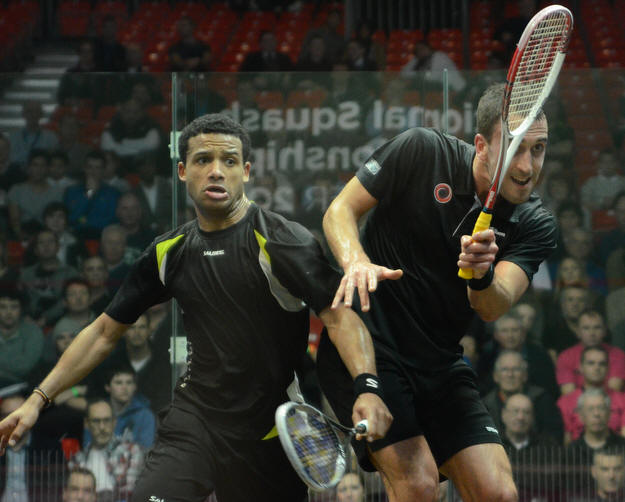
[1] Nick Matthew (Eng) bt [5/8] Alan Clyne (Sco)
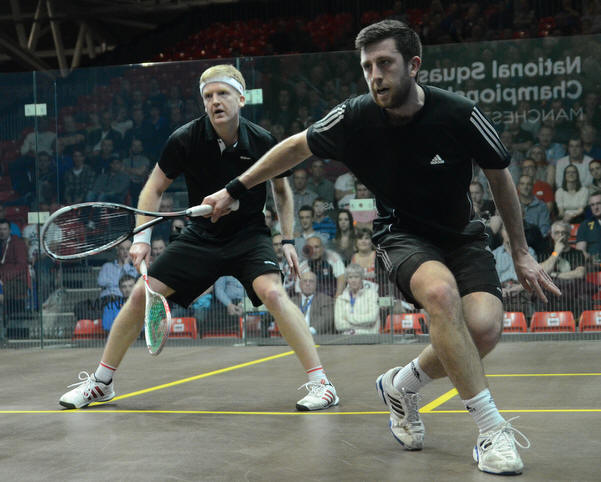
11/3, 11/4, 11/8 (35m) [5/8] Tom Richards (Eng) bt [3/4] Daryl Selby (Eng)
11/9, 8/11, 11/6, 12/10 (65m)
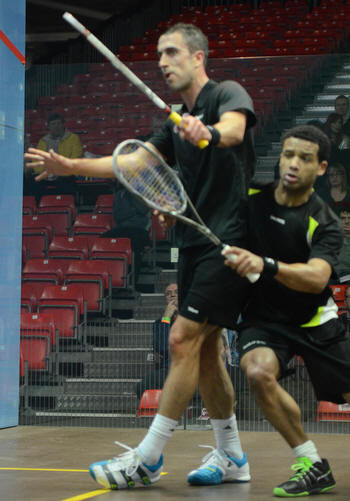
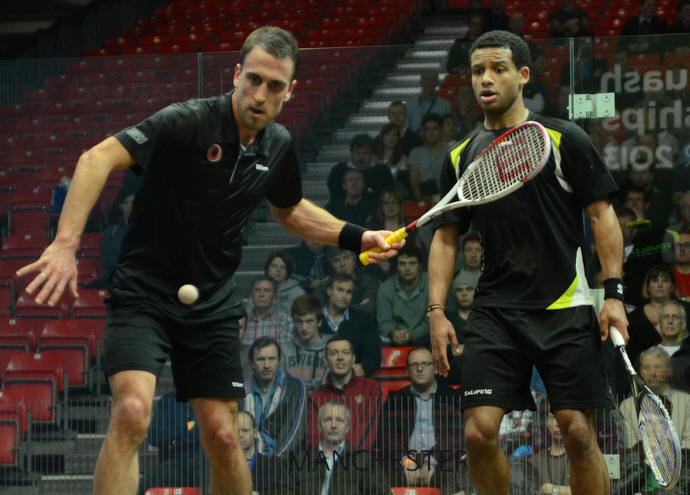
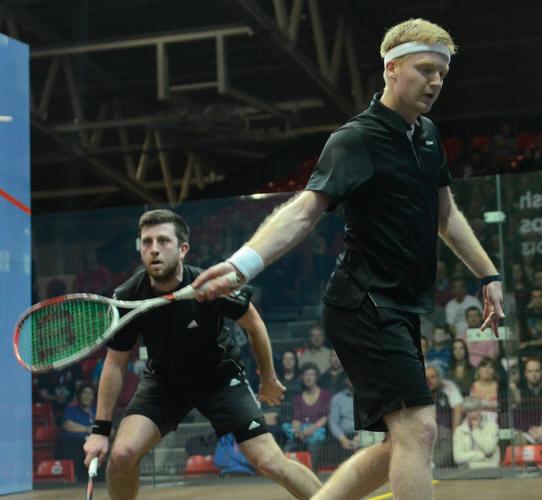
[3/4] Peter Barker (Eng) bt [5/8] Adrian Grant (Eng)
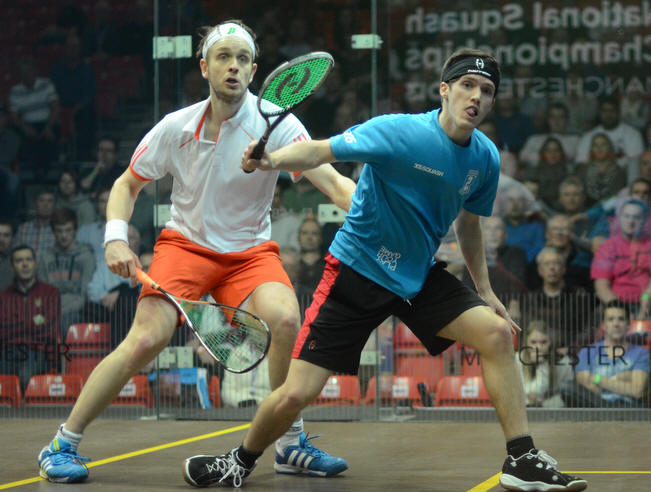
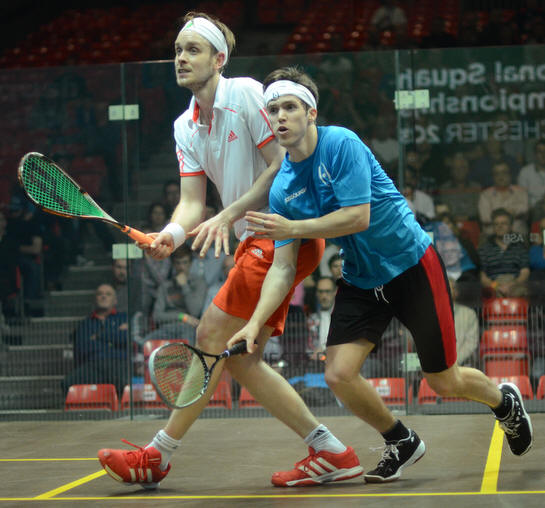
9/11, 11/7, 11/8, 11/7 (83m) [2] James Willstrop (Eng) bt [5/8] Chris Simpson (Eng)
4/11, 12/10, 11/7, 11/5 (63m)
"Big Four" through to women's semis “It’s
about time I got through to the final here,” declared Irelands’s
Madeline Perry after she despatched Wales’ Deon
Saffery in straight games to reach her sixth Nationals
semi-final.
Perry made a flying start, taking the first game 11/2, and
taking an 8/2 lead in the second, and although Saffery improved
as the match progressed, staying just a couple of points behind
throughout the third game, Perry remained enough in control to
close out the match in 25 minutes.
“I’d seen I was seeded to play Emily Whitlock in the quarters,
so I knew that Deon had a good win yesterday,” said Perry, “so I
wanted to make sure I got a good start while Deon was still
getting used to the court. She was getting better as the match
went on, so I was glad to finish it off.
“I’ve made the final of the British Open on this court, so it’s
about time I made the Nationals final at last, although whoever
I play in the semi it will be a tough one ...”
Emma
Beddoes today made her fourth consecutive appearance in the
Nationals quarter-finals. In the previous three she’d faced
Jenny Duncalf, Madeline Perry and Alison Waters, so as she said
yesterday, it was only right that she should meet the other
member of the ‘big four’, Laura Massaro.
And Emma made a great start against the two-time defending
champion, pulling ahead after a tight start to a long first
game, moving from 4-all to 10-6, forcing a few errors from the
world number three’s racket along the way.
Massaro fought back to level, and had game balls herself at
11-10, 12-11 and 15-14, but at the sixth attempt Beddoes took
the lead 17-15.
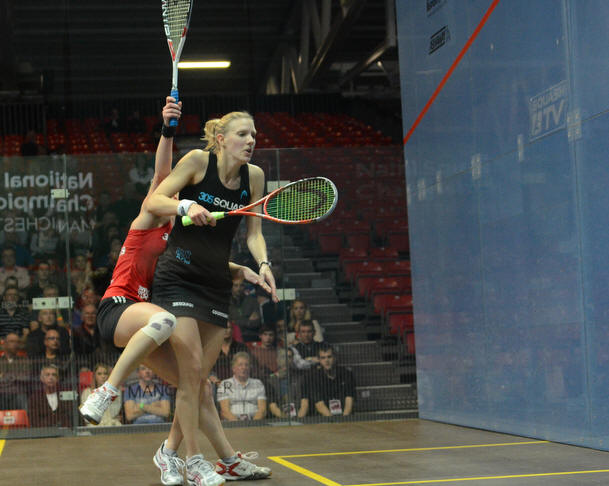
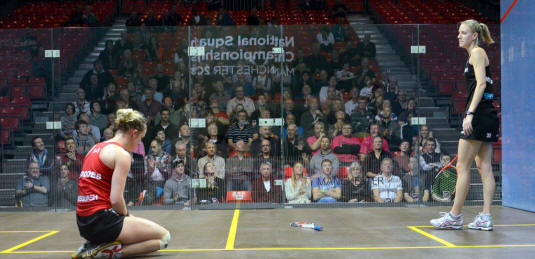
At 3-2 in the second Beddoes came off worse from a bump, tumbled
in the back corner and grazed her knee. After a few minutes’
break to patch that up Massaro took complete charge of the
match, taking the second 11/4 and the third 11/2.
“That break gave me the time I needed to refocus and start
playing the way I needed to,” said Massaro after the match. “I
don’t know if it affected Emma much, but it was certainly the
turning point.”
Beddoes
wasn’t done yet though, and she held a point or two advantage
through most of the fourth. The “CMONs” were coming from both
sides now, and at 8-all it was still very much in the balance.
Two points for Massaro to bring up match ball, one saved and as
Emma charged into the back of her opponent only to receive a no
let the champion was through.
“That’s the best Emma’s played against me,” said Laura, “but I
managed to play with a lot more structure after that break. It’s
pretty hot on there and it’s fast for a glass court, so you
can’t afford to overhit.
“That will have done me a lot of good for tomorrow,” she
concluded.
“I’m a bit gutted really,” admitted Emma, “you don’t come here
to lose close games!
“I played well in the first, well in the fourth, but the break
affected me when it really shouldn’t, she was ready from the
restart and I just lost my sharpness. You can’t afford to just
give her two games, can you!”
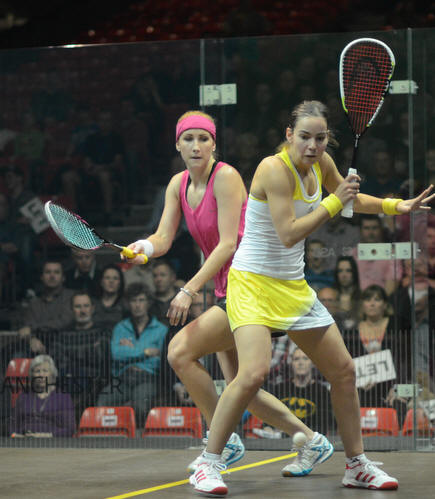
Having
missed out last year through injury, Jenny Duncalf was
keen to keep her otherwise impressive Nationals record going,
and the two-time champion looked in good enough shape to make a
real impact as she swept past Sarah Kippax in straight
games.
Duncalf was in charge of the first, led it 9/2, but Kippax
improved towards the end to lose it 11/5, and maintained that
improvement to stay close through most of the second. Duncalf
kept in front though and pulled clear at the end to double her
advantage 11/7 as Kippax dumped the ball into the tin at the end
of a long rally.
The third saw a dominant Duncalf again, and 8-1 lead was always
going to be enough, soon enough finished off 11/3. Kippax has
now fallen at the quarter-final stage six times in a row, but on
this evidence Duncalf will have her sights on a fifth final.
“I’m feeling physically better this year havinfg got a couple of
injury niggles out of the way, so hopefully 2013 will be a good
year for me,” said Duncalf.
“We haven’t played on this court for a while, I think I managed
to get used it it quicker than she did, and managed to keep my
nose in front. She had a bit of a sniff in the second but I
managed to keep the momentum going and stay ahead.”
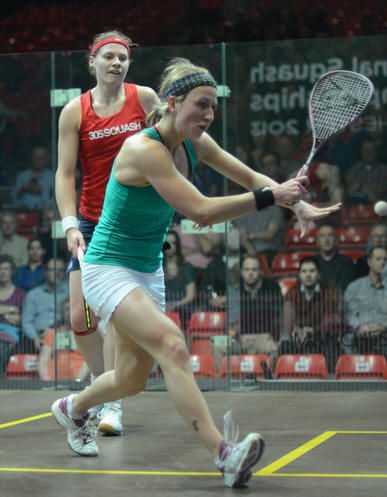
The
women’s semi-final lineup was completed when another two-time
champion triumphed, Alison Waters beating Sarah-Jane
Perry in straight games.
Perry, in her second quarter-final after a three year gap, after
a slow start which saw Waters take an 8-3 lead, was never out of
contention but could never quite close the gap to her more
experienced opponent.
That first game lead was enough to see it out 11/9 and Waters,
who always looked as though she had an extra gear if needed,
pulled away from 6-all in the second before taking and holding a
lead throughout the third.
“She played really well,” said the victor, “she’s got a natural
hold and I needed a taxi a few times there! You have to be on
your toes playing against her and I managed to stay in front.
“I’ve been back a year now, got my ranking up to five and I’m
hoping to build on that, starting tomorrow!”
Richards joins top three in men's
semis
Peter
Barker, playing in the nationals for the first time in three
years, went into today’s all-London, all-leftie match against
Adrian Grant having won their last seven encounters. “I
watched Adrian play yesterday, and it was the best I’d seen him
play for ages,” said the 3/4 seed, “so I knew it was going to be
a tough one.
Tough it was, four games where there was rarely more than a
point or two between them, the first taking longer than the
preceding women’s match and the match taking 83 minutes in
total.
Grant edged home in the first - “I wasn’t too downhearted, I
knew I’d made it tough” said Barker, while Barker held a slight
advantage through the next two to take the lead.
Barker
relatively raced to a 7/1 lead in the fourth, but Grant wasn’t
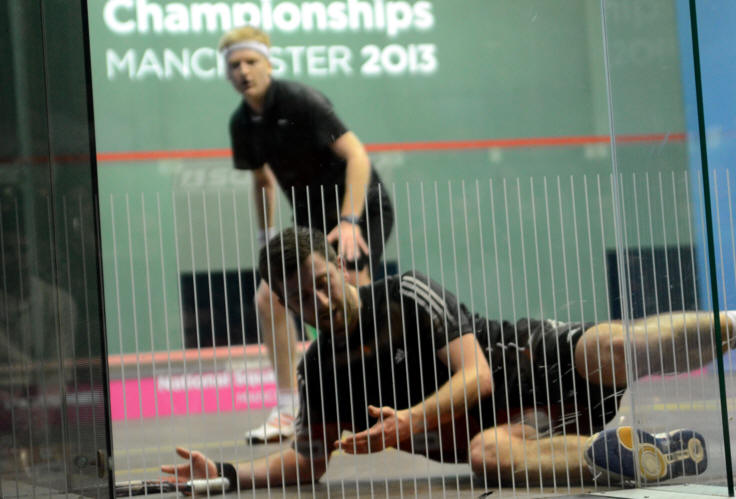
done, coming back to 6/7 but slipping behind again - literally -
as he scrambled in vain in the back corner after a slip on the
side wall. That made it 9/6, and two tins in the next three
points spelt the end for Grant as a relieved Barker made the
semi-finals for only the second time in eleven appearances.
“He started well but it was tough, I knew that if I could keep
the intensity up I still had a good chance of winning it,” said
the victor, “but it was hard work all the way.
“I’m really happy with today, I played some good squash and came
through a tough physical battle. This tournament is one of my
main targets this year so hopefully I can keep it going
tomorrow.”
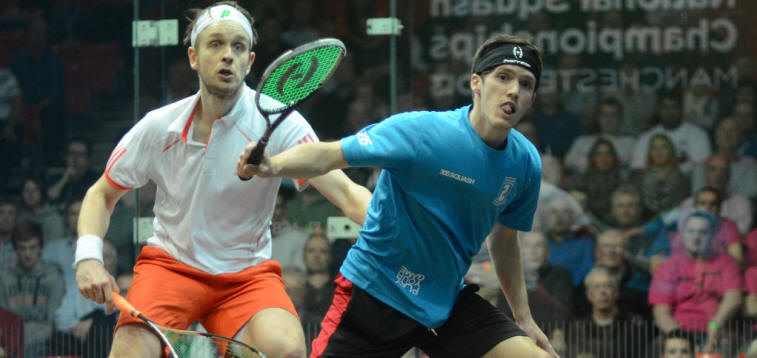
“I
was close to being in danger of going home there,” said a
relieved and out of breath James Willstrop after
surviving a 63-minute tussle with Chris Simpson to reach
the Nationals semi-finals for the eighth time.
Simpson played well from the start and was in control of the
fisrt game, taking it 11/4 with Willstrop making a few
uncharacteristic errors.
The second was close too, 4-all, 7-all, Willstrop went to 10-8
but Simpson pulled back to force extra points, Willstrop edging
it 12/10.
It was never comfortable after that, but it was the two-time
champion who held sway, taking early leads in the third and
fourth games and holding off his young challenger to take them
11/7, 11/5.
“I’m really pleased with the way the young guys in the chasing
pack are coming through at the moment,” said Willstrop, “but it
certainly makes it hard for us to stay ahead!
"He played well there, put me under pressure physically and made
me feel uncomfortable for most of the match - if he’s doing that
to the world number three he must be doing something right.
“I’m very much looking forward to the semi-final now, last yar’s
final had the best atmosphere of any match I’ve played anywhere
in the world so I really want to get back there, although Peter
will be hungry too ...”
Daryl Selby and Tom Richards are well used to playing out
long, tough matches, and the recent results - their last four
meetings were shared - reflect their closeness in the world
rankings, 13 to 12.
Tonight
was no exception to that rule, the hot conditions in the
National Squash Centre contributing to a match that featured
some very very long rallies as the two players tried to gain an
advantageous position before upping the pace to force the
winner.
You couldn’t split them, small leads were quickly contained,
first one way then the other, and with Selby, the 2011 champion,
leading 10-7 in the fourth a decider looked on the cards.
Not to be though as Richards saved all three game balls- the
last one with a volley drop that saw him on his haunches willing
it to not clip the tin - before Daryl slipped in the back cornet
to bring up match ball.
One
was all it needed for Tom, who finished it off neatly with a
dropshot from distance to reach the semi-finals for the second
time.
“We know each other inside out so we’re always looking for ways
to catch each other out - it can lead to a bit of frantic
retrieving at times but hopefully some exciting stuff too!”
“I’m really delighted to win that,” said Richards. “Every time
we play it’s long and tough and that was no exception, I’m just
happy to sneak it in the end."
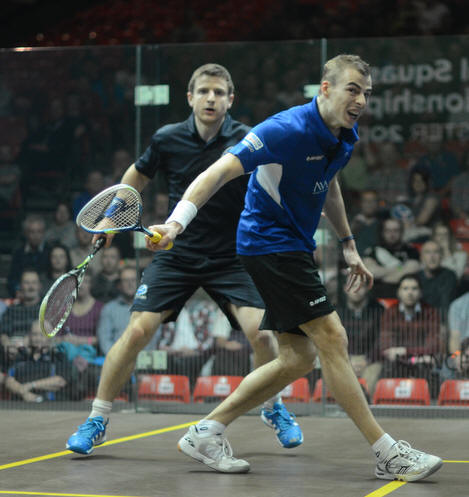
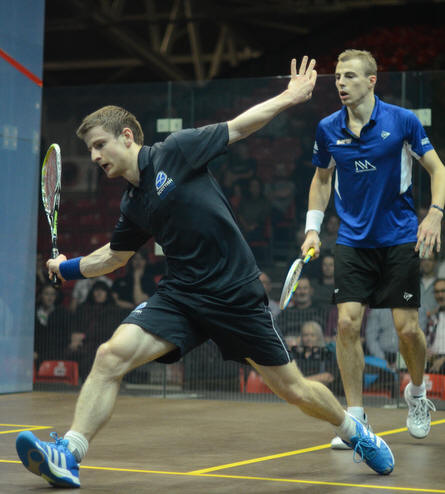
Last on - again - was defending champion Nick Matthew,
who was quickly into his stride against Scotland’s Alan Clyne,
taking the first game comfortably 11/3. Clyne, whose workrate
can never be faulted, improved in the second but Matthew still
had control of the rallies and doubled his advantage 11/4.
The Scot improved further in the third, an by now was giving the
world number two some real problems as the rallies grew tougher
and longer. 5-all, 6-all, 7-all, but then Matthew found the
extra to move to 10-7, finishing it off at the second attempts
with a deceptive crosscourt drop at the end of another punishing
rally.
It
wasn’t too long, didn’t finish too late so Matthew will be
satisfied with his work, and Clyne can be too.
“He feeds on tins of spinach between games,” quipped Matthew
after the match. “He’s very fit but also has a very deceptive
hold, he sent me the wrong way a few times there.
“I was happy with how I handled that, sometimes when I’m playing
well I try to finish things off too soon but I held it together
well and felt pretty good on there.
“It’s a sign of how much Tom’s improved that his beating Daryl
earlier wasn’t a massive upset, so it’s going to be a really
tough match tomorrow.”