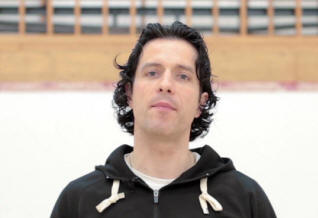
Paul Carter
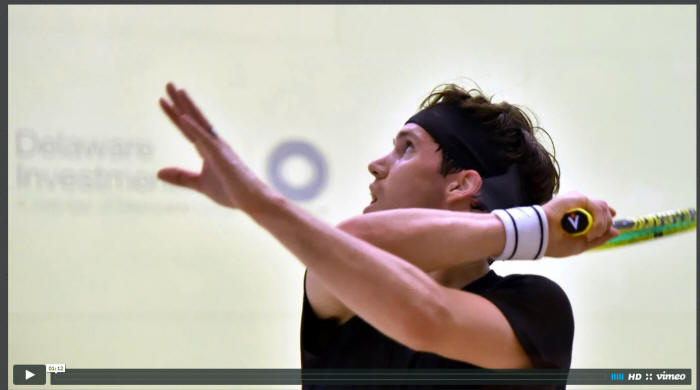
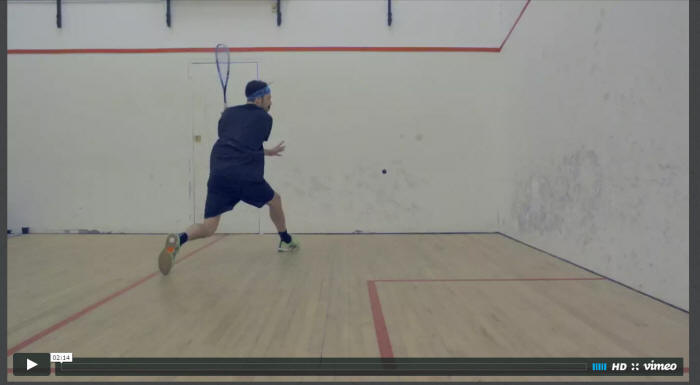
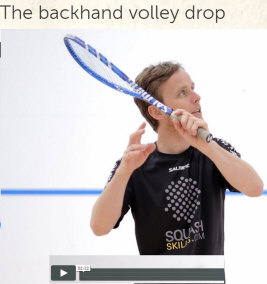
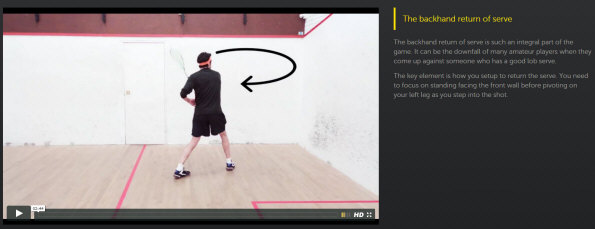
introduces the return of serve and highlights how beginner
or amateur players
often struggle with the high backhand volley return ...
see the video....
January is traditionally a
time for New Year's Resolutions, where people make vague
promises about things they would like to change and improve
upon about themselves.
If you are one of the people
who finds themselves playing less squash this time of year
just due to your local club's courts quietening down through
general seasonal circumstance, why not make a commitment to
go through a ‘mini pre-season' to really get your game
firing on all cylinders come 2017, and the resumption of
your usual squash routine?
read the blog...
What can be done when busy work schedules mean late nights
at the office? Or when you’re away travelling with business
or holidaying with the family, or during holiday periods
such as Christmas when many gyms and squash clubs are
operating on reduced opening hours?
Getting regular access to standard training facilities can
often be difficult, or at the very least extremely
inconvenient for many people in these circumstances
read the article....
Hi, my name is Priit and I'm a
squash coach in MetroSquash, Estonia.
Estonia is a tiny country of only 1.3 million inhabitants
next to Finland, Russia and Latvia.
A few months ago, I had a chat with SquashSkills owner Peter
Nicol about how to better organise squash teaching in
Estonia. I'm an avid fan of the SquashSkills.com site and
that it provides incredible value for a very small
investment.
read the article...
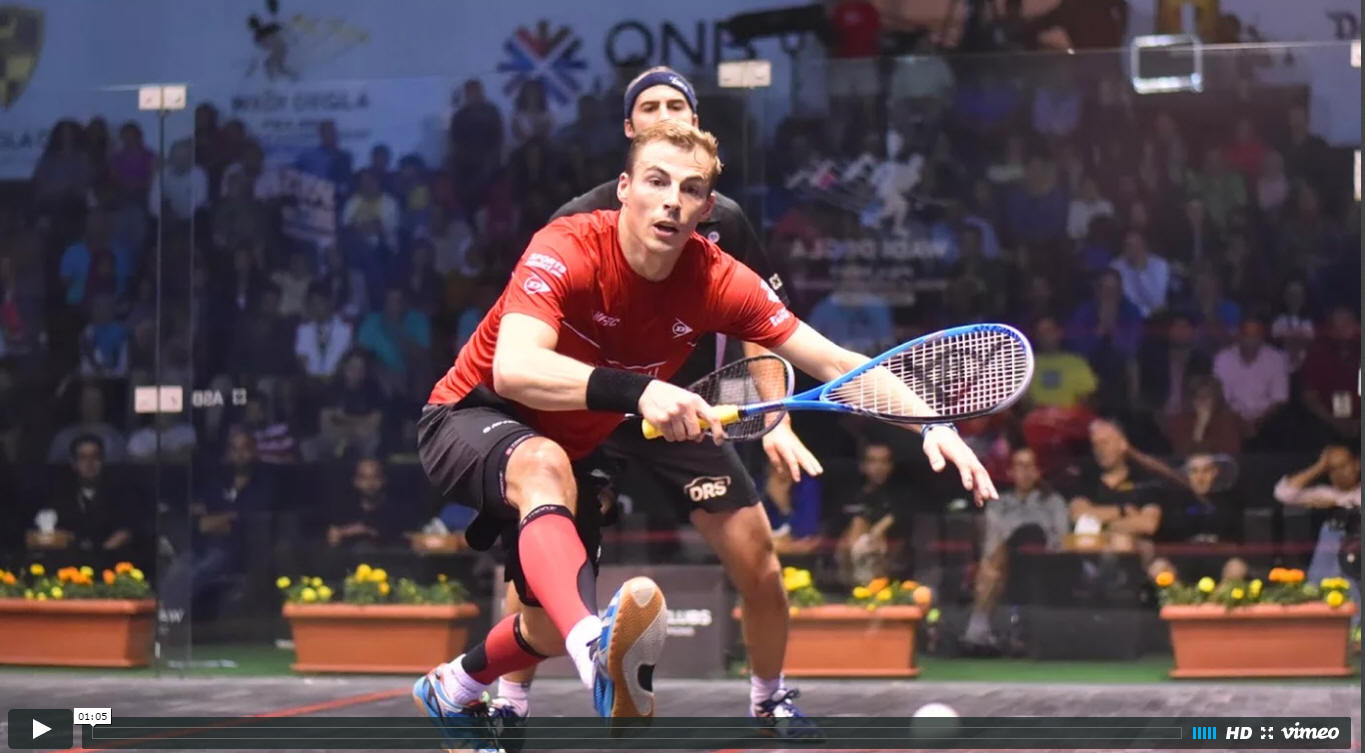
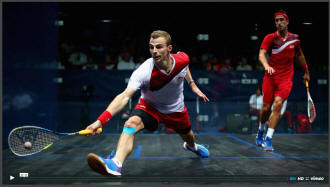
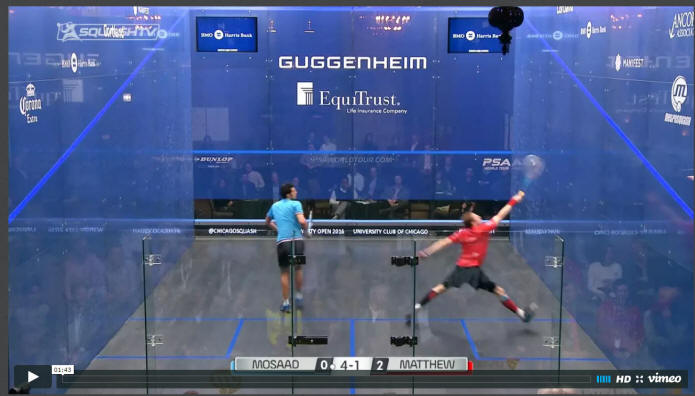
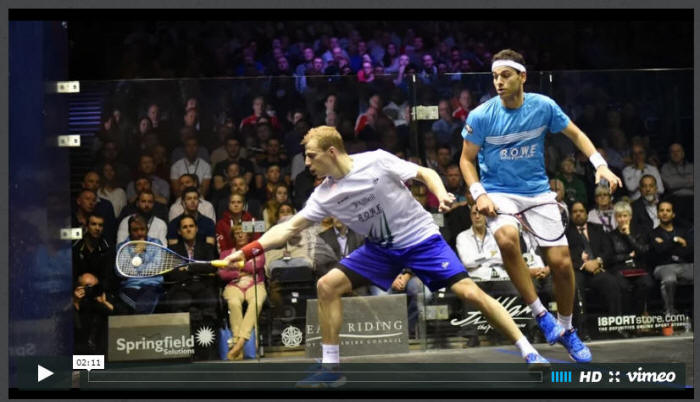
Three time World Champion
Nick Matthew talks us through the importance of being able
to turn a situation where you’re being forced to defend,
into a position where you can start to attack and build
pressure from.
View the video
This week on SquashSkills
Peter Nicol explains
all you need to know about executing the backhand drop
shot
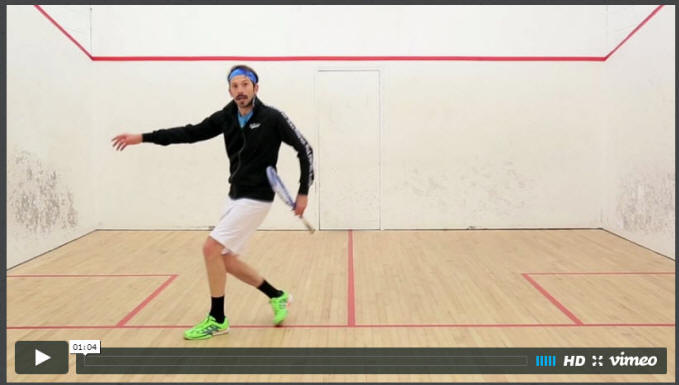
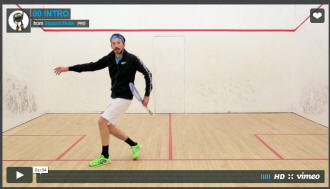
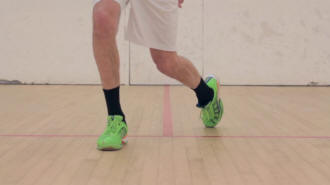
The 'turn & touch' drill
is a great one for developing single leg stability and
balance
View the video...
This week, I’ll be looking at
a 2012 study published in the Journal of Strength &
Conditioning Research: ‘Physiological Correlates of
Multiple-Sprint Ability and Performance in
International-Standard Squash Players’ (Wilkinson et
al.).
One of the most relevant and interesting pieces of squash-specific
research published in recent years, the study examined the
relationships between certain physical testing scores and a
player’s ability/world ranking, along with the fitness
factors most important for the key squash-specific element
of multiple-sprint ability (the ability to rapidly recover
and maintain maximal effort during subsequent sprints).
read the blog...
The element of athleticism
that ties in most specifically with these explosive, multi-directional
movements is power. But perhaps even more so than many other
aspects of fitness and conditioning, power training
is often poorly understood and frequently misappropriated in
many training programmes.
Read the blog...
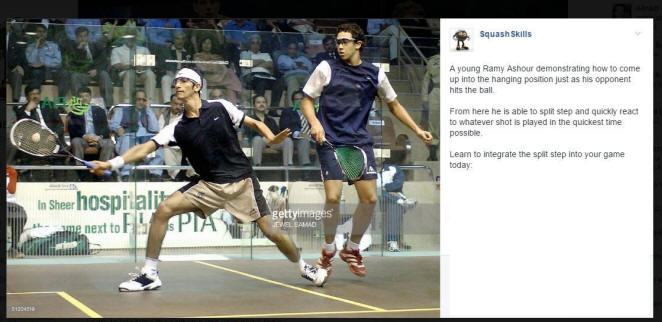
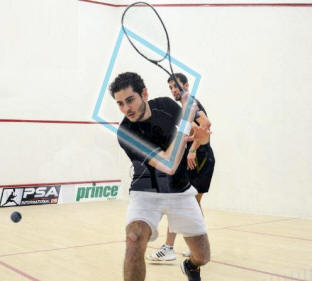
Ramy has an unusual
technique on his short balls where he uses a very short
swing and lifts up at the end of his follow through. It
enables him to put lots of spin on the ball which means it
dies quickly and stays a long way up the court...
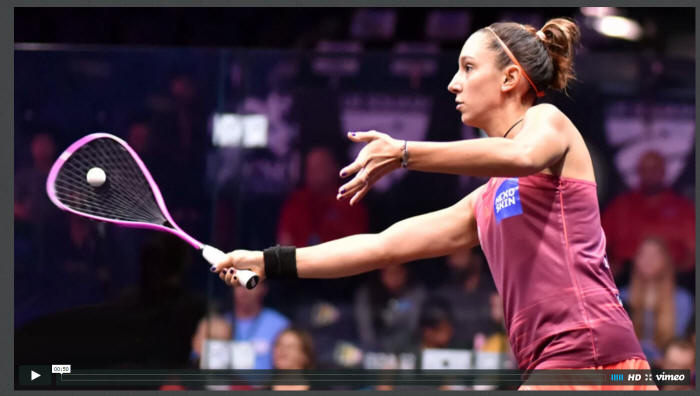
Laura Massaro
highlights the need to be aware about your opponent's
strengths and weaknesses, and explains how you can construct
rallies to really exploit them.
Something that I’ve spoken a
lot about is the importance of dedicating specific training
time to developing the individual athletic qualities instead
of just training your conditioning ‘generally’ – physical
attributes such as Speed, Power, Strength, and Stability are
vital...
read more...
For this series we welcome former World Number One
Natalie Grainger who will be focusing on using racket
head speed to generate power.
Water is an incredibly
important element for the function of the body, so losing
too much fluid during a game/training session can seriously
affect performance and subsequent recovery.
Read the blog....
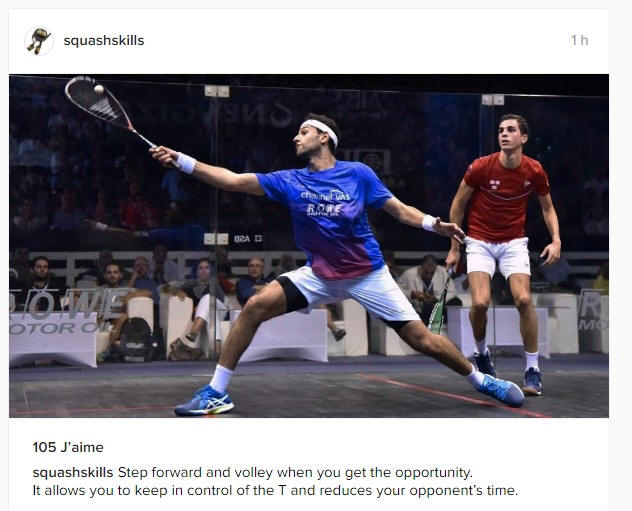
Nick Matthew explains how he
builds pressure and maintains control of the T by drifting
the ball into the back corners and evading his opponent's
volley.
View the video
Autumn is fast approaching and
the squash season here in the northern hemisphere is now
well underway, with tournaments and league competition of
all levels starting to kick back into full swing.
Motivation and ambition is high at this time of year, so to
help get you ready for the on-court battles ahead, we’ve put
together our SquashSkills guide for you to have the PERFECT
squash season:
P.repare, E.valuate, R.ecover, F.ocus, E.njoy, C.hallenge,
T.rain!
Read the blog
When two opponents are so
evenly matched, it can come down to the minutest of factors
that give a player that crucial edge that carries them to
victory – surprisingly, there is research to suggest that
this may even include something as seemingly trivial as the
colour of the clothes that you wear!
Working with players at a training camp recently, I noticed
that over half of them happened to be wearing red t-shirts.
This is a great session for
developing your squash-specific speed and stability working
into the front corners of the court - traditionally one of
the toughest movements for many players.
View the video...
Jethro demonstrates how to
position yourself so you are able to see your opponent,
follow the ball off the front wall and allow enough space to
transfer weight into the shot.
View the video...
In this series Lee Drew
analyses PSA footage and explains how the best players
on tour have a signature shot that they execute perfectly
when playing with confidence.
View the Video....
As much as we’d like to think the standard of our play (and
our opponents) means we will always be moving into the
corners, the reality is we are more often than not moving
around the middle.
There are three areas I would like to cover in this blog:
Forehand side
Backhand side
Right down the middle!
read the blog...
The warm-up is a crucial part
of the performance puzzle for the squash player, and is a
topic we devote a lot of attention to here in the content on
the site, and in the sessions at our SquashSkills training
camps.
A lot of the benefits from the warm-up are not related just
to injury prevention as many believe, but can also help
actually boost your physical performance.
The dynamic multi-directional movements that make up so much
of the game of squash, place a lot of strain on certain key
muscle groups.
What should you be doing after a match to best promote
recovery in preparation for playing/ training the next day
(or possibly even later the same day if within a tournament
environment)?
One thing we've been hearing a lot recently, is players
desperate to increase their conditioning but struggling to
find the time to do so.
With this in mind, we've created a brand new 'Bolt-on'
programme, consisting of a series of short, sharp physical
sessions of no more than 10 minutes’ duration, that you can
simply bolt-on to the end of your usual on-court games/training
each week.
Read the blog...
VIDEO, LEE DREW TIME - ALL ABOUT
DECEPTION
Lee Drew introduces the art of disguise and highlights
some of the different ways you can become deceptive on
court.
View the video....
Lee Drew helps you to use the position of your body to
fool your opponent.
Getting into a physical training programme can be tough
though, and a lot of players struggle to know what to do,
when to do it, and – perhaps most importantly – how to
maintain it.
We’ve had lots of
requests for a summer training guide, so we’ve pulled
out all the stops to put together a comprehensive training
programme suitable for all levels of fitness.
Read more...
One area of particular importance to the squash player, more
specifically those playing in tournaments or who are
following a daily training programme, is Post-Session
Nutrition.
When it comes to recovery from a tough match or training
session, what you consume immediately afterwards plays a big
role in your body’s ability to recuperate and repair, ready
for your next performance the next day (or possibly even the
same day, for those playing in a tournament).
With squash being such a high intensity, dynamic, multi-directional
sport, injuries are unfortunately relatively common.
As well as these more sudden trauma injuries, people who
regularly participate in physically challenging sports can
also be very susceptible to over-use injuries.
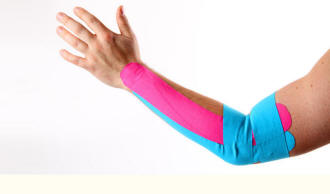
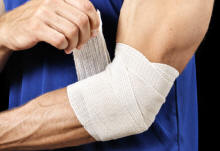
One of the most common of these in racket sports is the
dreaded lateral epicondylitis, more commonly known as
‘Tennis Elbow’.
Despite the general
acceptance of this perceived knowledge, a lot of people
still aren't really sure exactly WHY the warm-up is so
important, beyond perhaps the occasional vague allusion to
‘helping me to not get injured'
Read the Blog
Peter Nicol talks about the
different targets
you can use on the front wall
when hitting straight drives
Stressful
circumstances affect us all – from work difficulties, family
issues, financial problems, or even just bouts of
frustration with your game when you feel you're playing
badly – and everyone is subject to negative thoughts and
mind-sets at times.
These mental distractions can cause big problems with your
focus during a game however, when you're physically on court
but your mind is elsewhere.
To avoid your game being affected, these thoughts ideally
need to somehow be ‘shut away' somewhere so as they can't
disturb your performance.
Read the Blog
Why you need to attend the
Camp: A solid length base is the foundation to every
good squash player's game. You need to be able to keep your
opponent in the back corners and create opportunities to
attack the front.
There are a number of different types of length with
different purposes, used at different times. From an
attacking dying length, through to a defensive lob.
Over the course of the weekend we'll cover both attack and
defence, giving you the tools you need to use the back
corners effectively.
For the squash player, the ability to move
dynamically and efficiently around the court is key.
To this end, much of the training that we do to improve our
athletic capabilities revolves around various drills and
workouts focusing on the muscles of the lower limbs –
various squats, jumps, and lunges, that predominantly target
the quads, hamstrings, and gluteals.
So what is power, and how does it relate to
the squash player?
Power can be seen as a function of muscular strength – in
this context, meaning the ability to produce high levels of
force at the fastest rate possible.
Professional and
amateur players alike from a wide variety of sports are seen
eagerly munching them as part of their game day ritual, but
what are the actual benefits of consuming bananas for the
squash player, and is their reputation as an athlete's go-to
snack well-founded?
One of the most common reasons given for the consumption of
bananas by sportspeople and exercisers, is for their
proposed 'refuelling' effect. They typically contain around
25g of energy giving carbohydrate, just over half of which
is simple sugar.
Understanding which
squash ball to use can be a bit confusing. Choosing the
correct ball can make a huge difference to the amount of
enjoyment you’re able to take from a practice session or
match.
The Pro (or double yellow dot) is the official ball of the
leading global organisations, thats the WSF, PSA and WSA. It
is the only ball used in international and professional
events. It’s suitable for professionals, good club players
or for playing on very warm courts.
My motto when
playing professionally was “to never to stop learning”. The
very best players in the world do not get to a point and
then decide to stop practicing or improving – the ones that
do you see flying down the ranking list pronto!!
I'm a bit of a
technique geek. I get excited by seeing a really good swing
in action and sometimes get caught up with what the swing
looks like as opposed to where the ball ends up.
This is wrong, because if someone is hitting a target time
after time despite not having the most aesthetically
pleasing swing then they must doing something right.
However, I am a firm believer that if you create and
aesthetically pleasing swing where all the bio-mechanics are
working as they should, then you will hit the ball more
accurately, more consistently and with more power.
For those of you who follow the Facebook page, you will
notice that I'm a big fan of shoulder rotation on the
backhand side and often highlight this whenever I see a
photo of someone doing this correctly. For me having good
shoulder rotation at the beginning of the backhand swing is
fundamantal. It's where all your power, and all your
consistency comes from.
It can often be
difficult to squeeze in much extra time for any additional
squash-specific conditioning training beyond your usual
on-court sessions, so it’s important that anything that you
do add really maximises the time you have available.
One of the exercises you’ll often see in many of our
sessions and programmes here on the site that really fits
the bill, is the rear foot elevated split squat – a
favourite of many top sports performance specialists and
athletic trainers such as Eric Cressey and Mike Boyle.
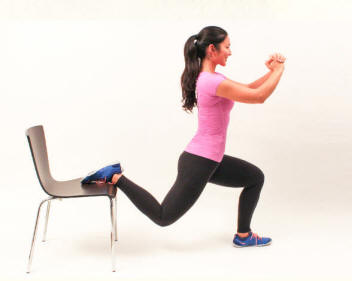
The rear foot elevated split squat (RFESS), also often known
as the Bulgarian split squat, is a variation of the standard
split squat or ‘static lunge’ exercise.
The exercise set-up is similar to the end position of a
lunge, but with the key differentiation of the back leg
being elevated on a step, bench, or small platform.
Obviously the lunge exercise is one of the primary movement
pattern that squash players should be practicing, but adding
in some RFESS sets to your training programme can have a
number of additional benefits.
We’ve got a great selection of training programmes now live
on the site, with more being added every month.
Whether you’re looking to focus on your speed, your
endurance, or if you’re just looking for a general all-round
physical boost, there’s a programme for you.
This month the spotlight is on our beginner’s strength
training programme.
You will have heard us use the saying
“you’re only as good as your movement" on a number of
different occasions here at SquashSkills. We’re firm
believers in the fact that to hit a good squash ball you
need to be able to get to the ball, in a solid and stable
position.
Good movement isn’t just all about raw speed. It encompasses
a whole host of different facets... weight transfer,
balance, spacing, timing and efficiency amongst other things.
Improving your movement goes way beyond just making your
feet go faster, it’s about thinking how your whole game
links together and flows. The best movers in the World never
looked like they were moving quickly, everyone used to say
how Jansher just seemed to walk around the court...
Read the Blog...
If you’re serious about taking your squash
to the next level, at some point you’re going to have to
incorporate some form of structured physical training into
your programme.
We’ve got some great fitness content on the site, with a
wide variety of exercises, sessions, and programmes covering
the entire spectrum of fitness needs and goals.
I’m often asked though, what I consider to be the most
important aspects of squash-specific conditioning training.
It’s difficult to condense such a wide ranging topic down
into just a few brief ideas, but here are what I would
consider my 3 top tips for squash fitness training.
A typical squash rally contains multiple sprints, lunges,
turns, and changes of direction. These movements need to be
strong and dynamic to allow you to cover ground quickly, get
onto the ball early, and not be controlled and manoeuvred
out of position by your opponent.
The element of athleticism that ties in most specifically
with these explosive, multi-directional movements is power.
But perhaps even more so than many other aspects of fitness
and conditioning, power training is often poorly understood
and frequently misappropriated in many training programmes.
Read the blog
Lee Drew:how to turn defence into attack
with the counter drop
when you don't have the ability
to get underneath the ball and lift
A couple of weeks ago here on the SquashSkills blog we
looked at the ‘benefits of beetroot’, and how it has the
potential to boost physical performance – perfect for squash
players looking for an extra edge on court. Another food
that has recently been suggested to also have similar
performance benefits, is dark chocolate.
Chocolate is obviously not generally considered the
healthiest of snacks due mainly to the high sugar and fat
content. The cocoa in chocolate has actually been linked
with several health benefits however, with dark chocolate
considered the best source due to its higher cocoa content
...
Read the blog...
DP explains how
Nick is able to relieve pressure and often win rallies
by utilising the cross court lob from the deep backhand.
So many
squash players neglect their strings, even though proper
stringing can make a huge difference to the way a racket
performs.
If you play three or more times per week we recommend that
you restring your racket at least three times a year to
ensure optimum performance.
With time strings lose their elasticity, and even if you're
playing less frequently you should ideally still restring
your racket at least a couple of times a year.
The health & fitness media is always quick
to hit us over the head with the latest 'superfood' fad, be
it Pomegranate, Acai Berries, Wheatgrass, or whatever the
current flavour of the month fruit/veg is being declared the
indisputable last word in nutritional goodness.
The simple truth however, is that pretty much all varieties
of fruit and veg contain nutrients important to our health...
read the blog...
Peter Nicol was one of the best on the Tour for
his movement to the front of the court. Now he tells you how
he did it...
"As a large proportion of the game is spent in the back
corners of the court (even more when losing!), being able to
move into that area and still have options is crucial so
that you do not get stuck digging the ball out continuously.
Over the years I have practiced a certain type of movement
into the back corners but actually very rarely use it when I
play. This is similar to my movement to the front as well.
However, what the movement practice has done for me is set
me up to be in the best possible position so that I can
choose to attack or defend the next shot."
"Being able to move fluidly and quickly into the front of
the courts is obviously incredibly important.
To either attack or defend well in these areas it is crucial
to have solid movement, more so than any other area, in my
opinion. This is because you are generally moving at a
greater speed than to the middle or back of the court and
there is more urgency required.
As with most movement patterns, the first step is pivotal as
to what shot you will then be capable of playing when
arriving at the ball.
A really common first step is to move sideways towards the
sidewall rather than directly to or inside where the ball
will be. This means you end up too close to or behind the
ball and therefore means your shot options are limited – you
see a lot of cross courts hit because of this first step
mistake..."
When I’m thinking about my movement or trying to incorporate
a new movement pattern or style into my play, I first always
start with understanding my balance and transfer of weight.
The new movement may be the best possible way to get in and
out of a shot but if you are slightly off balance or lack
the proper transfer, the movement becomes difficult and
could potentially be worse than your existing pattern of
movement.
I always start with my position on the T, feeling the ground
beneath my feet and gently swaying in different directions (without
moving feet) to understand where my balance is. This also
clears up which is the correct first leg to move off the T
with as in different positions within your swaying,
different first movements are called for...
“Gentlemen, we will chase
perfection, and we will chase it relentlessly, knowing all
the while we can never attain it. But along the way, we
shall catch excellence”
Vince Lombardi
This quote from legendary American Football coach Vince
Lombardi (winner of 5 championships within 7 years with the
Green Bay Packers), illustrates how a lot of athletes
approach the concept of ‘perfection’ in their sports.
Striving for perfection pushes elite performers to ever
greater heights, even whilst acknowledging that the
achievement of perfection is ultimately unattainable.
In my coaching I find there are so many different ways to
coach the game and depending on whom I am coaching,
different techniques are needed to get the best out of
different players.
Saying that the swing should be the same for a 12 year old
at 4’2” to a 6’4” 30 year old man is just not correct. Yes,
there are core principles but so much has to be adapted to
suit the individual. Nowhere is this more apparent than in
the movement aspect of the game.
I want to discuss how different movement patterns have been
taught and what has changed over the years.
The rackets are lighter, players are in better shape and
therefore the pace of the game across all standards has gone
up. That means movement is now much more fragmented and
random compared to before when patterns and more controlled
movement was needed/used.
With squash being such a high
intensity, dynamic, multi-directional sport, injuries are
unfortunately relatively common. Sprains and strains of the
joints in the lower body can occur from too rapid a change
of direction, mistiming a step, or over-lunging onto a ball.
As well as these more sudden trauma injuries, people who
regularly participate in physically challenging sports can
also be very susceptible to over-use injuries.
One of the most common of these in racket sports is the
dreaded lateral epicondylitis, more commonly known as
‘Tennis Elbow’.
In fact, both of the commonly used names for the condition
are actually misnomers – the problem is certainly not
limited just to tennis players, and the more correct medical
terminology would be lateral epicondylosis (the suffix
‘itis’ refers more to an inflammatory issue or disease).
read more...